An entry is part of a scenario
A potential entry only makes sense together with scenario conditions: what must happen first, what confirms the idea and what invalidates it.

Build a trading scenario from multiple market factors: chart structure, levels, volume, volatility, liquidity densities and signals. Screener helps evaluate a potential entry in context rather than presenting a guaranteed trading decision.
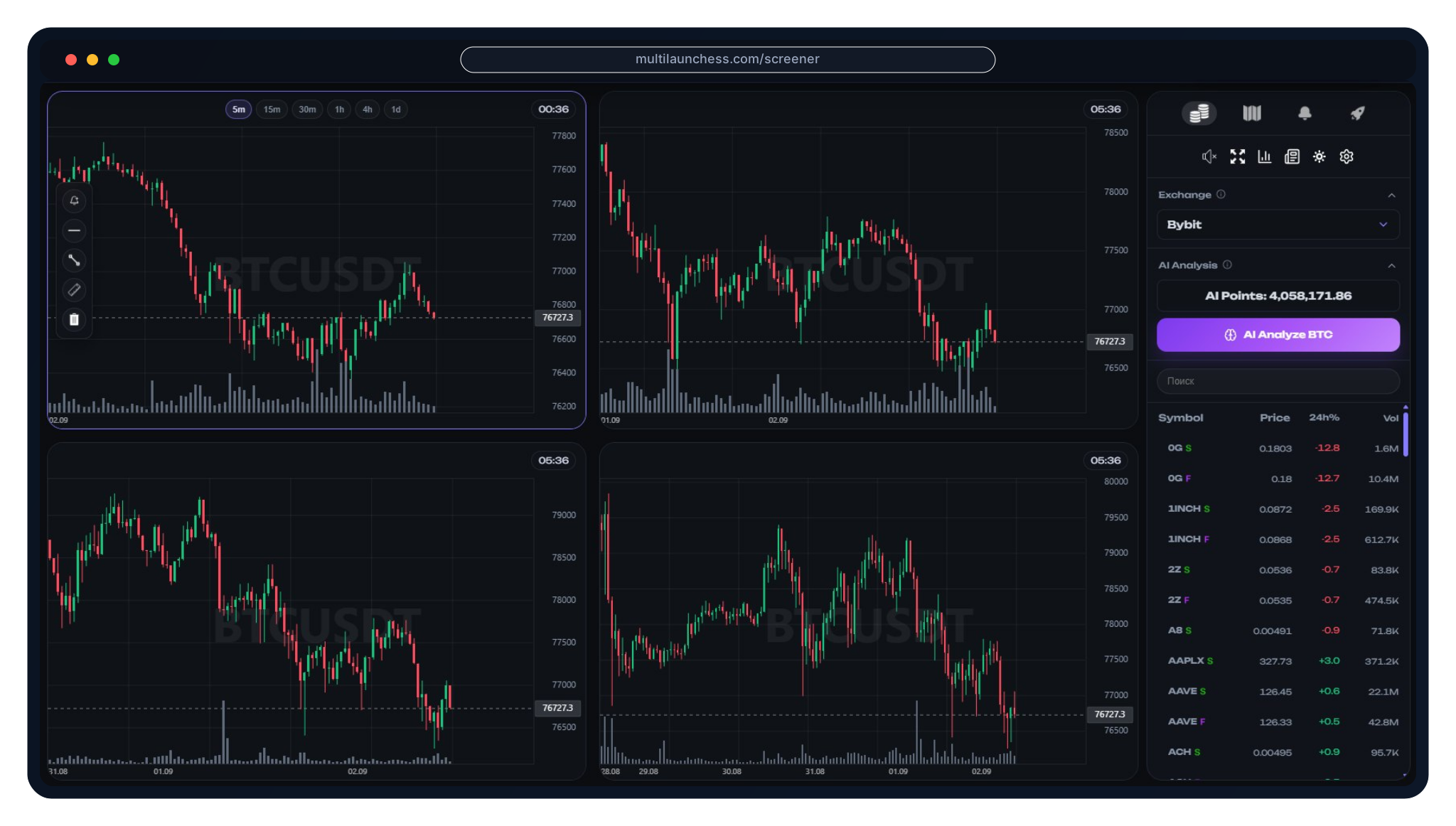
A potential entry only makes sense together with scenario conditions: what must happen first, what confirms the idea and what invalidates it.
Markets move dynamically. It is usually more useful to evaluate an area, price structure and confirming factors than to guess a single exact value.

Screener combines charts, quotes, volume, volatility, levels, liquidity densities and signals for evaluating a trading idea.

Before a potential entry, review market direction, local price structure and the position of price relative to recent extremes.

Key levels help identify areas where a market reaction deserves additional attention.

After price moves through a level, review what happens next instead of treating the first break as automatic entry confirmation.

Compare price movement with trading volume to understand how much market activity accompanies the move.

The volatility regime affects movement size and risk. The same chart location can have different meaning in calm and fast markets.

Large visible limit orders add order-book context but do not guarantee that price will stop or reverse.

An LLM signal can draw attention to an instrument, after which the idea should be verified with current Screener data.

A signal does not automatically define entry, stop or trade outcome. Those depend on your trading logic and risk.

Chart structure, levels, volume, volatility, liquidity and signals are more useful when evaluated together.

Use Screener to move to an instrument that matches the conditions you want to analyze.

Review price structure, nearby levels and the current activity regime.

Set an observable condition that would make a potential entry consistent with the scenario.

Before a trade, know what market move or change makes the original idea no longer valid.

It is a price or area where a trader considers opening a position when predefined scenario conditions are met.
No. Screener helps evaluate potential entries using multiple market data layers; it cannot guarantee an exact entry or trade outcome.
Chart structure, levels, volume, volatility, liquidity, available signals, risk and the condition that invalidates the idea.
A signal highlights an event or instrument. An entry relates to a specific scenario condition and requires additional verification.
A scenario should include not only a potential entry but also conditions for taking a result or invalidating the original idea.
Screener provides a workspace for supported Binance and Bybit markets including Spot and Futures; position mechanics and risk differ between them.
Open Screener and evaluate a potential entry using chart structure, levels, volume, volatility, liquidity densities and signals before making a trading decision.